From Field to Future: How BADMC is Powering Food and Water Security
In Barbados, the conversation around food and water security is no longer theoretical, it is practical, urgent, and already underway. At the centre of this transformation is the Barbados Agricultural Development and Marketing Corporation (BADMC), quietly but decisively reshaping how the island produces food, manages water, and empowers people.
Guided by the Mission Barbados policy framework, BADMC is demonstrating that national development is not built on isolated efforts, but on coordinated, mission-driven action that connects farmers, technology, infrastructure, and opportunity into one cohesive system.
Driving Food Security Through Smarter Production
At its core, BADMC’s work aligns strongly with Mission 3: Food and Water Security, with a clear and sustained focus on increasing local agricultural production. Over the past several years, the organisation has been working closely with the Ministry of Agriculture to move farmers from underutilised plots and uncertainty toward consistent, scalable production.
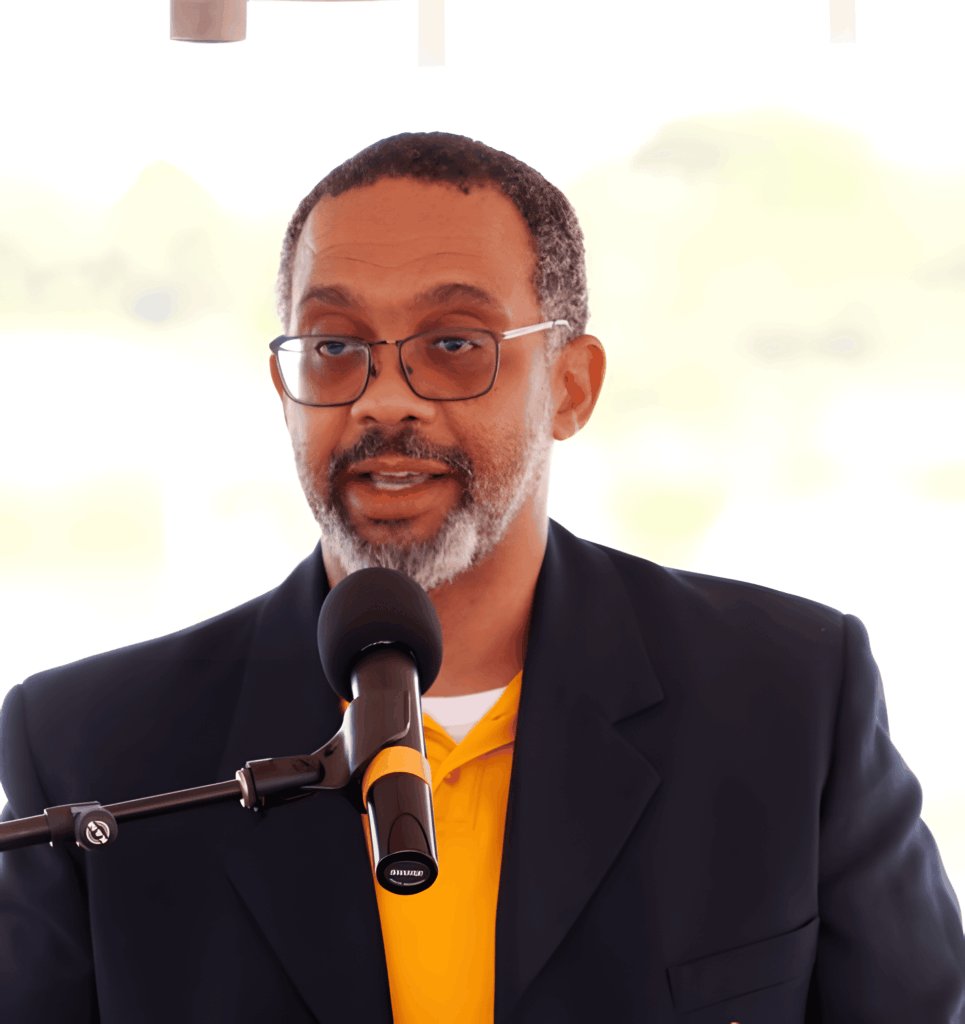
CEO (Ag) of the BADMC Frederick Inniss explained, “The major push that we are driving at the moment with the Ministry of Agriculture is to increase production… to get farmers to that tipping point where everyone has re-entered the market and is increasing production.”
A major innovation in this effort is the introduction of contract growing arrangements, giving farmers a reliable market and encouraging them to treat agriculture as a business rather than a side activity. This shift is critical because farming in Barbados has historically been challenged by unpredictability, weather variability, praedial larceny, and inconsistent market access.
By providing structured agreements and better planning tools, BADMC is helping farmers produce with confidence, stabilising supply chains and allowing supermarkets and importers to better forecast local availability. The result is a more resilient agricultural ecosystem that reduces reliance on imports while strengthening national food security.

Water Security: Turning Waste into Opportunity
Perhaps one of the most transformative elements of BADMC’s work is its role in rethinking water use, particularly through the integration of the South Coast Sewage Project into agricultural planning.
Traditionally, water scarcity has limited agricultural output, especially during the dry season when irrigation sources are strained. BADMC currently relies on a network of wells, but water extraction must be carefully managed to protect the aquifer and ensure domestic supply.
The South Coast Sewage Project presents a breakthrough opportunity: treated wastewater can be repurposed for irrigation, creating a reliable, year-round water supply for farming. Instead of being discharged into the sea, this resource becomes a critical input for food production.
This integration reflects exactly what Mission Barbados is designed to achieve, linking infrastructure investments with economic and environmental outcomes. With consistent irrigation, farmers can increase yields, reduce climate risk, and maintain production even during the driest months.
Sustainable Development and Climate-Smart Agriculture
Beyond food production, BADMC is advancing Mission 1: Sustainable Development through a growing emphasis on climate-smart farming practices.
Through collaboration with international partners such as the FAO, the corporation is introducing solutions that help farmers adapt to climate variability while maintaining productivity. These initiatives are not simply about environmental protection, they are about ensuring that agriculture remains viable as a long-term economic activity.
By preparing farmers to utilise improved water systems and adopt modern techniques, BADMC is ensuring that Barbados does not just produce more food, but does so sustainably and efficiently.
Empowering People Through Agriculture
Mission Barbados also emphasises worker empowerment and enfranchisement, and BADMC’s programmes reflect this through tangible opportunities for economic participation.
The Feed Programme (Farmers Empowerment and Enfranchisement Drive) is a powerful example. Introduced to support individuals, particularly those affected by economic disruption, it provides access to land, starter inputs, and training, effectively “offering a hand up rather than a handout” explained Inniss. In essence, “giving them a head start” he added.
Participants are given a pathway into agriculture as an income-generating enterprise, helping to reduce unemployment and expand the pool of local producers. While not every participant continues long-term, the programme creates access and opportunity, reinforcing agriculture as a viable livelihood.
Building a Modern, Connected Agricultural System
BADMC’s work also speaks to broader government transformation goals by integrating technology, data, and cross-agency collaboration into agriculture.
Efforts are underway to improve visibility across the sector, tracking what is planted, when it is planted, and how much can be supplied. This data-driven approach allows better coordination between farmers, retailers, and policymakers, reducing inefficiencies such as overproduction or unnecessary imports.
At the same time, the organisation is exploring the use of digital tools and artificial intelligence to improve decision-making, from irrigation management to production planning.
Inniss adds, “The major benefit of the Missions Barbados is that it gives focus on the need for partnership by creating an overarching structure where all of these separate functions are pushed together in a way that it can bring ‘the multiplier effect’.”
Expanding Value Through Agro-Processing
Food security is not only about production, it is also about value creation and reducing waste.
BADMC is working alongside partners like the Barbados Industrial Development Corporation (BIDC) to strengthen the agro-processing sector, transforming raw produce into shelf-stable, value-added products. This creates new revenue streams, supports export potential, and ensures that surplus production is not lost.
By linking farmers directly to processing and manufacturing opportunities, BADMC is helping to build a more complete agricultural value chain, one that extends from field to finished product.

Conclusion: A Practical Blueprint for National Development
What makes Mission Barbados powerful is not just its vision, but its practicality. Through the work of organisations like BADMC, the policy is being translated into real-world outcomes: more food grown locally, smarter use of water resources, greater economic opportunity for citizens, and stronger collaboration across sectors.
The integration of initiatives, such as using treated water for irrigation, aligning farmers with guaranteed markets, and connecting agriculture to manufacturing, demonstrates how coordinated action can produce results greater than the sum of its parts.
Mission Barbados is not an abstract framework; it is a working model for development. And as BADMC continues to connect the dots between land, water, people, and markets, it is clear that the future of Barbados is being built not just with ideas, but with purposeful, strategic action on the ground.