How The HeritEdge Connection Is Building Social Cohesion Through Barbados’ Living History
What does it mean to belong? In Barbados, the answer is increasingly being shaped not only by policy, but by people, individuals, communities, and organisations rethinking culture as something lived, shared, and continuously created. At the forefront of this shift is The HeritEdge Connection, an NGO demonstrating that the goals of Mission 2 – Social Cohesion & National Identity – are not abstract ambitions, but realities already taking shape across the island.
Culture is not static, it is us
For the Co-Directors of The HeritEdge Connection, cultural heritage is not a collection of artefacts tucked away in archives, it is fundamentally about people. It is about how Barbadians understand where they come from, and more importantly, how they choose to interrogate the past and imagine their future.
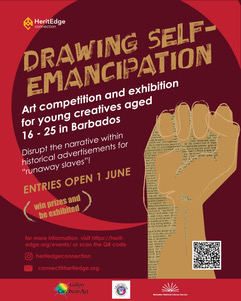
This perspective reframes culture as active and participatory. Whether through projects exploring apothecaries and medicines in 18th century Bridgetown; youth art engagement on the theme of self-emancipation, or interdisciplinary capacity-building symposia, HeritEdge’s work consistently asks a simple but powerful question: “What parts of our shared past shape who we are today, and who we can become?”
That question sits at the very heart of national identity. As Co-Director for Operations Pauline Mager-Jordan reflected, identity is built by examining “how did we get to where we are now and what are we taking forward.”
Social Cohesion begins with connection
Mission 2 emphasises unity, but HeritEdge’s approach reveals that cohesion does not emerge automatically, it must be cultivated. It happens when people begin to see where their stories intersect, and complement each other.
“Social cohesion comes from individuals within the community understanding how they overlap,” said Mager-Jordan.
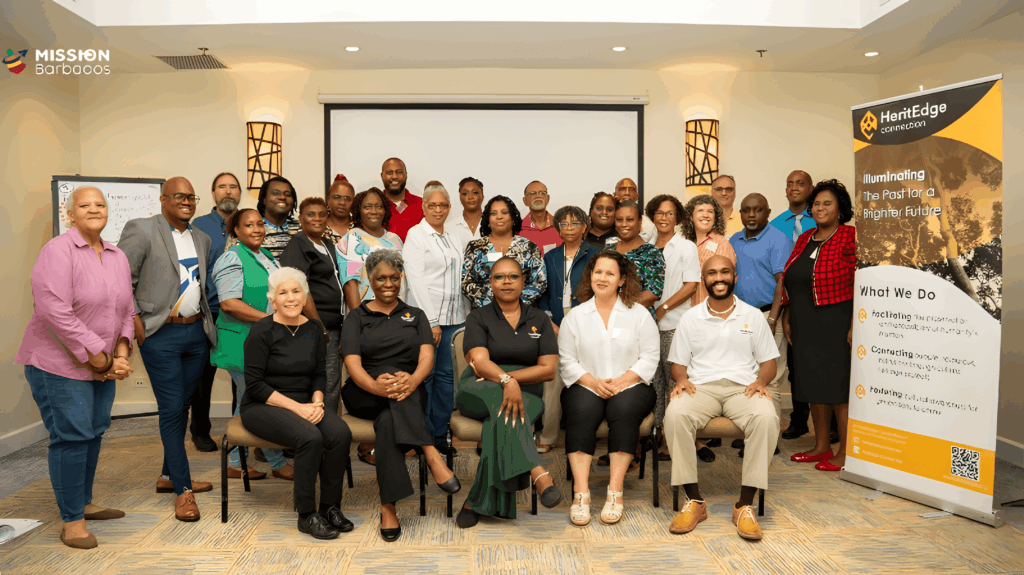
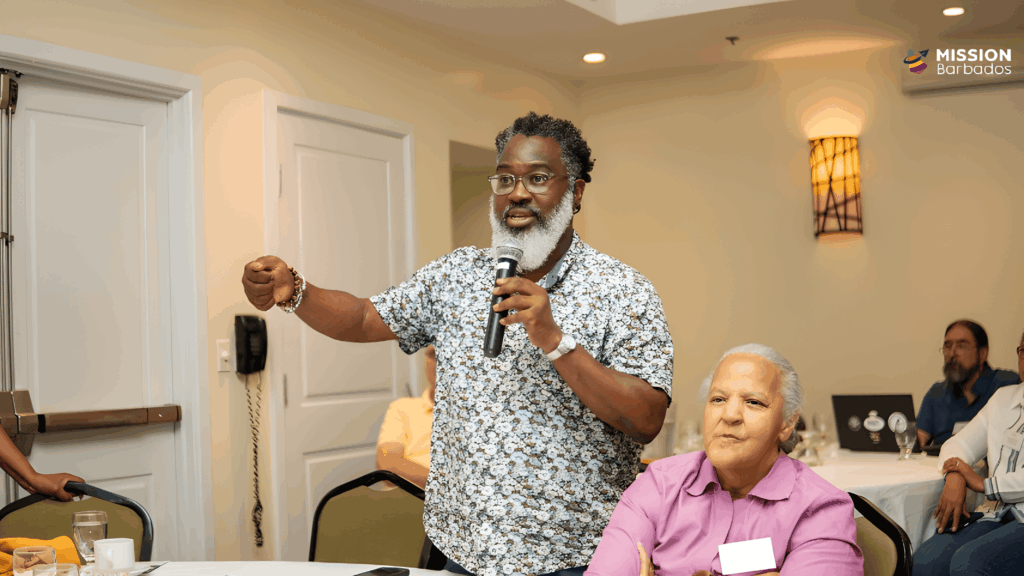
The recent HeritEdge symposium offered a glimpse into what that looks like in practice. Participants from museums, archives, government agencies, and grassroots organisations came together, many meeting for the first time despite working in the same space. What emerged was more than conversation; it was a recognition of shared purpose and the urgency for collaboration.
There was also an honest realisation: Barbados’ cultural sector has often operated in silos. This reality has resulted in approaches that focus on paucity of resources in our small island nation. Yet in that same room, there was energy, openness, and a strong desire to build something collectively—and lots of talent and people with complementary skills, knowledge, and expertise.
From Ideas to Impact: Re-imagining cultural projects
One of the most striking outcomes of the symposium was the shift from isolated ideas to what Mager-Jordan described as a “collective brain.”
Out of that collective thinking came projects that directly support national identity and cohesion, including:
Revisiting 1966 (Independence Year):A multi-dimensional exploration of Barbados at independence: what people wore, ate, sang, and felt. The goal is to capture lived experiences, not just official narratives, potentially through exhibitions and community-sourced materials. Look out for more details soon!
Tracing a Self-Emancipated Lineage:Following the story of a self-emancipated individual through generations to the present, highlighting resilience, continuity, and transformation across centuries.
Crowd-sourcing National Memory:Focusing on the concept of community archives and encouraging Barbadians to contribute artefacts, stories, and family histories—recognising that heritage lives in homes, churches, and communities, not only in formal institutions.
These projects do more than preserve history—they create shared ownership of it. They invite citizens to see themselves as contributors to the national story.
Beyond Government: The Critical Role of NPOs and NGOs
A key insight from the HeritEdge conversation is that nation-building cannot rest solely on government. Policy may guide direction, but identity is shaped in everyday interactions, between generations, within communities, and across organisations.
As Mager-Jordan noted candidly, “The government can’t make my heart want to be Barbadian.”
Organisations like The HeritEdge Connection fill that vital space and they have an important role to play. They connect people to stories, facilitate dialogue, and create platforms for participation. They help transform national identity from a concept into a lived experience: one that is inclusive, evolving, and deeply rooted in shared understanding.
Listening to the Past to Shape the Future
Perhaps most powerful is HeritEdge’s commitment to capturing the full spectrum of Barbadian experience. This includes voices that are often overlooked, intangible expressions of memory that have not been included in mainstream institutional collections, minority perspectives, intergenerational memories, and even conflicting views about pivotal moments like Independence.
Planned initiatives such as community “wisdom exchanges” and crowdsourcing events and oral history collection reinforce that heritage is not only about preservation, it is about dialogue. When younger and older generations engage, history becomes a tool for empathy, learning, and unity.
In this way, The HeritEdge Connection is not only preserving the past, it is actively shaping the future by deepening understanding in the present.
Mission 2 Is Already in Motion
The work of The HeritEdge Connection demonstrates a powerful truth: Mission 2 is not a distant goal; it is already being lived.
Through collaboration, storytelling, and innovation, organisations across Barbados are redefining culture as something dynamic and shared. They are building bridges between institutions and communities, between past and present, and between individuals whose stories together form the fabric of a nation.
The opportunity now is to expand that work: bringing more voices into the conversation, strengthening partnerships, and ensuring that Barbados’ rich heritage continues to inspire pride, cohesion, and identity for generations to come.